

Ashwagandha Side Effects

Updated: April 2, 2026

Picture of Ashwagandha plant

What the Research Really Says, And Who Should Be Careful.

Walk into almost any health-food store and you’ll find shelves lined with Ashwagandha. Celebrities swear by it. Influencers blend it into smoothies. And chances are you know someone who says it’s the only thing that helps them feel human again.

There’s no doubt about it. Ashwagandha is the herb de jure. But popularity brings scrutiny. For every person claiming deeper sleep, another insists it kept them awake. For every enthusiast who says they feel calmer, there’s someone else warning of thyroid swings or liver concerns. The internet’s imagination, as usual, gallops faster than the evidence.

So what do we actually know about Ashwagandha’s side effects? 

The Herb Behind the Headlines
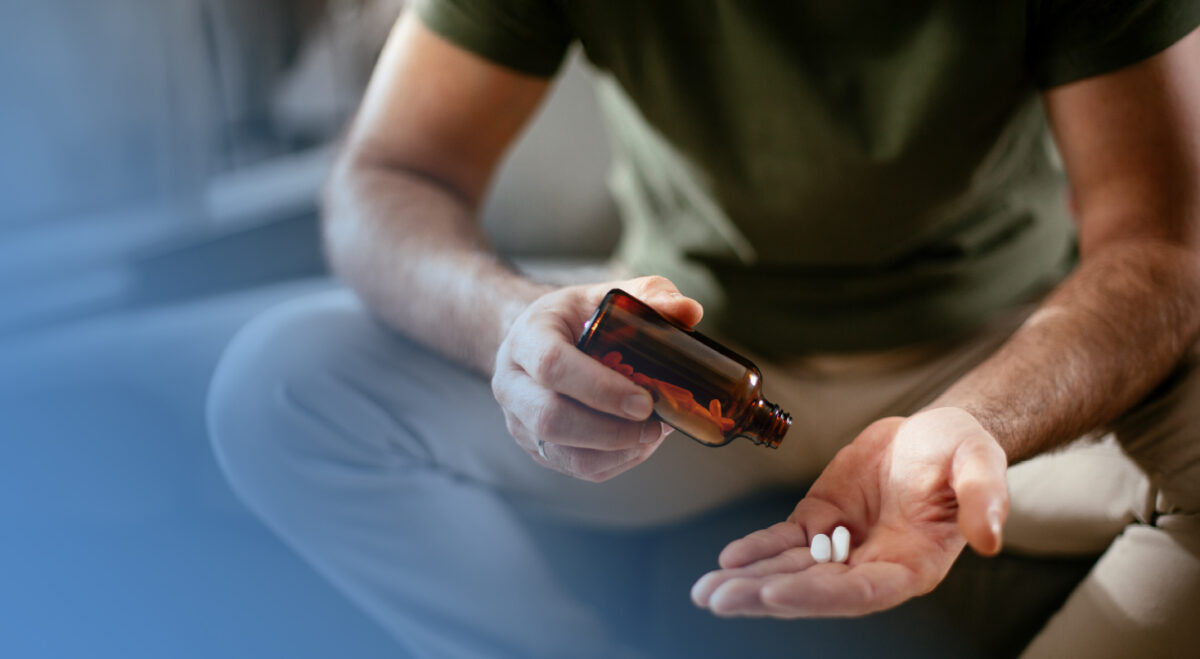
Man pouring out supplement pills

Ashwagandha is an adaptogen. In other words, it helps the body ‘adapt’ to stress. It doesn’t sedate. It doesn’t stimulate. It simply regulates your body’s natural stress response.  

So clinical trials circle around three themes: stress, sleep, and mental clarity under pressure. And the results are always the same. Participants report that although their lives are just as demanding as before, their ability to cope no longer feels quite so fragile.

But here’s where nuance matters. Ashwagandha is not one thing. Different extracts behave differently. Some use only the root; others combine root and leaf. Some are standardized; others are little more than pulverized plant matter in a capsule. When people talk about side effects, they’re often talking about completely different substances under the same name.

To understand the risks, you have to start with the studied forms. The ones researchers have actually put into human bodies and monitored carefully.

What the Studies Actually Show

Most clinical trials on Ashwagandha run between eight and twelve weeks. And these studies consistently paint the same picture: reduced stress, better sleep, quicker sleep onset, improved resilience, and very few adverse events. The side effects that do appear tend to be minor — a little digestive discomfort, a brief wave of drowsiness, or in some cases, a momentary lift in alertness.

A handful of trials have followed participants for longer. Up to six months1, and even a full year. In those settings, researchers have repeatedly checked the usual danger signs: liver enzymes, kidney markers, thyroid hormones, basic blood counts. If Ashwagandha were the physiological troublemaker some corners of the internet insist it is, this is where the evidence should start to crack. Instead, in healthy adults using standardized root extracts at reasonable doses, those markers have stayed comfortably within normal limits, and serious adverse events have been notably absent.

The most interesting evidence comes from a 12-month2 observational study, the longest look we currently have at real-world use. Nearly two hundred adults took a standardized extract daily for an entire year while clinicians monitored their lab work. The results didn’t make headlines. And that’s precisely the point. Nothing dramatic happened. No spikes in liver enzymes, no alarming thyroid shifts, no slow-burning toxicity. A few people experienced mild, self-limiting complaints; most simply felt better.

It’s not a perfect study. It wasn’t randomized, but it aligns with everything shorter trials have suggested. For healthy adults, Ashwagandha has no adverse side effects.

The Aswaghandha Side Effects That Worry People Most

This is where reality and rumour tend to diverge.

Shortness of breath
This is one of the most alarming symptoms mentioned online. Yet it barely appears in scientific literature. Across controlled trials, long-term studies, and safety reviews, it simply isn’t a recognized pattern. When it does surface anecdotally, it tends to involve high, unstudied doses or individuals with preexisting respiratory or anxiety issues. Not something to dismiss, but not something to expect.

Sleeplessness or feeling “wired”
Curiously, clinical studies show the opposite: people sleep better. But a minority do experience a brief phase of increased alertness, especially when they take it late in the day. This is less a red flag and more a reminder that Ashwagandha isn’t a sedative — it modulates stress signalling. For some bodies, clarity arrives before calm. Adjusting dose or timing usually resolves it.

Liver concerns
In a large-scale review3 of 1,396 peer-reviewed publications on Ashwagandha researchers found that roughly 97% of the published literature reported no safety concerns. Only a tiny fraction even mentioned possible toxicity, and just about 1% touched on liver issues at all. 

Thyroid interactions
This is the one area where caution is warranted. A few small studies4 show that Ashwagandha can modestly influence thyroid hormones, usually nudging them upward. Healthy adults in these studies remained within normal limits and experienced no symptoms. But for individuals on thyroid medication, even small shifts can matter. So for those taking these medications, it’s best to consult with a healthcare provider before adding Ashwaghanda to your supplement regime. 

Feeling “overactivated”
If you spend enough time on Reddit, you’ll find a dozen versions of the same story –– Ashwagandha leaves you feeling wired. But when you actually read the clinical trials, the pattern looks very different. Study after study5 reports fewer anxious thoughts, better sleep, and lower stress scores… not nervous system overdrive. In fact, in a 60-day randomized, double-blind, placebo-controlled trial of adults under high stress, researchers noted significant reductions in anxiety and cortisol. And no signs of overstimulation in the treatment group. If anything, the people taking ashwagandha slept better. So where does the “overactivated” feeling come from? Most often from the wild world of unstandardized powders, megadoses, and cognitive-enhancement blends that bear little resemblance to what researchers actually test. In clinical settings, when you use a standardized extract at a safe dose, the nervous system doesn’t speed up. It relaxes.

Is Ashwagandha Safe Long-Term?

Yes, with caveats.

The evidence we have — up to twelve months6 — shows no accumulating toxicity in healthy adults using moderate, clinically studied doses. Lab work remains stable. People often feel progressively better. But we don’t yet have multi-year data across massive, diverse populations, so humility is essential.

So for most people, long-term use appears safe. But for expectant or nursing moms, those with thyroid disorders, autoimmune disease, liver issues, or complex medication regimens, a doctor’s oversight is wise. Not because the herb is dangerous, but because it never hurts to be cautious! 


What About The Ashwaghanda In Magnesium Relax?

AlgaeCal chose to use Sensoril® in Magnesium Relax. In a market crowded with anonymous powders and vaguely described “blends”, Sensoril®  stands out as one of the better-studied forms of Ashwagandha available today, with more than a dozen clinical and preclinical studies7 behind it. In those trials, researchers didn’t just ask people how they felt; they tracked stress scores, sleep quality and key blood markers, and kept a careful log of anything that might hint at trouble. The pattern that emerged was reassuringly consistent: meaningful improvements in how people coped with stress, and no serious safety concerns. In other words, the version of Ashwagandha inside Magnesium Relax isn’t there because it’s fashionable, but because it’s one of the few that has actually earned its place in the scientific literature.

Magnesium Relax

*These statements have not been evaluated by the Food and Drug Administration. This product is not intended to diagnose, treat, cure, or prevent any disease.

Results consistent with Clinical Trials. Results may vary.

†Open to US customers only.

Article Sources

  1. Kale S, Lopresti A, Suri R, Garg N, Langade D. Safety and Efficacy of Ashwagandha Root Extract on Cognition, Energy and Mood Problems in Adults: Prospective, Randomized, Placebo-Controlled Study. Journal of Psychoactive Drugs. 2024
  2. Salve, J., Kale, S., Prajapati, B. L., Sparavigna, A., Savant, M., Ademola, J., & Langade, D. Year: 2025 Title: Safety of 12-Months Administration of Ashwagandha (Withania somnifera) Standardized Root Extract in Healthy Adults: A Prospective, Observational Study Journal: Phytotherapy Research
  3. Ronen Y., Ebert C., Tamim-Yecheskel B.-C., Zev S., Kantor O., Ben-Hamo H.-A. (2025). Comprehensive safety evaluation of Withania somnifera (Ashwagandha): an AI-driven meta-analysis and quantitative structure–activity relationship based toxicity assessment. Frontiers in Nutrition. 2025.
  4. Sharma AK, Basu I, Singh S. Efficacy and Safety of Ashwagandha Root Extract in Subclinical Hypothyroid Patients: A Double-Blind, Randomized, Placebo-Controlled Trial. Journal of Alternative and Complementary Medicine. 2018;24(3):243-248.
  5. Chandrasekhar K, Kapoor J, Anishetty S. A prospective, randomized double-blind, placebo-controlled study of safety and efficacy of a high-concentration full-spectrum extract of Ashwagandha root in reducing stress and anxiety in adults. Indian Journal of Psychological Medicine. 2012;34(3):255–262.
  6. Salve, J., Kale, S., Prajapati, B. L., Sparavigna, A., Savant, M., Ademola, J., & Langade, D. Year: 2025 Title: Safety of 12-Months Administration of Ashwagandha (Withania somnifera) Standardized Root Extract in Healthy Adults: A Prospective, Observational Study Journal: Phytotherapy Research
  7. https://supplements.kerry.com/proactive-health/womens-health/sensoril/sensoril-clinical-studies/

Article Comments

Add New Comment

Your email address will not be published. Required fields are marked *

  1. DRU TAGLIAPIETRA

    April 6, 2026 , 9:05 pm

    I would love to hear about AlgaeCal’s studies on THEIR product, especially for those on thyroid medication. I would love to try, but don’t want to screw up my thyroid levels.

  2. Yoori AlgaeCal

    April 8, 2026 , 12:55 am

    Thanks for your feedback, Dru—we completely understand wanting more product-specific research, especially when medical condition / medication is involved.

    We don’t expect this to be an issue. In a clinical study, Sensoril® Ashwagandha (used in Magnesium Relax) was shown to be safe and well-tolerated at doses of 125 mg, 250 mg, and 500 mg per day over 8 weeks (Pandit et al., 2024).

    Additionally, in another study HERE, no changes were observed in thyroid markers (T3, T4, TSH) or other key health markers.

    That said, you’re absolutely right that we don’t currently have studies specifically on Magnesium Relax itself. We always recommend checking with your doctor or pharmacist before adding it if you’re taking thyroid medication, just to be sure it’s the right fit for you. HERE is our Doctor Information Sheet for your convenience.

    We really appreciate you sharing this!
    – Yoori

  3. Sharyn Harbison

    April 9, 2026 , 8:56 am

    I’m on 70 mlg of Armor thyroid and my blood work is coming back fine while being on the algaeCal collagen .

  4. Bee AlgaeCal

    April 9, 2026 , 11:40 am

    Thanks for sharing your experience, Sharyn! We’re glad to hear you’re doing well on AlgaeCal Collagen. 🙂
    -Bee

  5. Leesa Stearne

    April 7, 2026 , 1:08 am

    I noticed more than one use of the words “healthy adults” when describing who was taking Ashwagandha in the trials. Surely the vast majority of people trying supplements and herbal “medicine” are doing so because they are unwell, or struggling to combat a life-threatening disease. Would it not be more helpful to conduct trials of Ashwagandha on cohorts of sick people?

  6. Yoori AlgaeCal

    April 8, 2026 , 12:53 am

    Great question, Leesa—you bring up a really thoughtful point.

    Clinical trials often start with “healthy adults” to better control variables and clearly understand how a supplement works without other conditions influencing the results. It helps researchers establish safety and baseline effects first.

    That said, it doesn’t mean Ashwagandha wouldn’t be helpful for those who are unwell—it just means more targeted studies would be needed for specific conditions.

    We appreciate you raising this perspective! 🙂 Any other questions, don’t hesitate.
    – Yoori

  7. martin

    April 7, 2026 , 2:35 pm

    If one is taking Algaecal Plus, your Vet. D3, and Magnesium Relax can they be taken together or somehow spread out.??? thank you.

  8. Yoori AlgaeCal

    April 8, 2026 , 12:28 am

    Great question, Martin!

    Yes, they can be taken together. That said, many people prefer to take AlgaeCal Plus and D3 Complete with meals, and Magnesium Relax right before bedtime to support sleep.

    Either way works, so you can choose what fits best with your routine. 🙂
    – Yoori

  9. LeeAnn Hughes-Mastin

    April 9, 2026 , 11:58 am

    unfortunately you should not take it if you are on blood thinners.

  10. Bee AlgaeCal

    April 10, 2026 , 10:43 am

    Hello LeeAnn!

    While we’re not medical professionals, we’re aware that there may be interactions between certain medications supplements like Ashwagandha! That’s why it’s always a good idea to consult with your healthcare practitioner before adding any new supplement to your routine, especially if you are taking prescription medications such as blood thinners. Your healthcare provider can provide personalized advice based on your individual health needs and circumstances, helping you make informed decisions about your supplement regimen.

    If you’d like to discuss this with your doctor, you’re welcome to share THIS information sheet for Magnesium Relax with them.

    Let us know if you have any other questions! 🙂
    -Bee

  11. Brenda Aaronson

    April 9, 2026 , 12:50 pm

    Yes, I and others already know about the thyroid concern, which is exactly why I wrote you about it.
    I would love to try AlgaeCal but I’m on thyroid medication and my Doctor told me absolutely do not take Ashwagandha.
    It works on your immune system and can push it into hyper-drive which is exactly what we don’t want.

  12. Bee AlgaeCal

    April 10, 2026 , 10:57 am

    Thanks for sharing, Brenda! You’re right, Ashwaganda has been shown to have a small impact on thyroid levels, so those taking thyroid medications like yourself should be extra cautious. We completely understand sticking to your doctor’s recommendation, and we’re sorry Magnesium Relax isn’t a good fit for you.

    Of course, if you ever want to double check this with your doctor, feel free to share THIS information sheet with them!

    Feel free to reach out if you have any other questions!
    -Bee

  13. Ann

    April 9, 2026 , 2:03 pm

    Hi! After reading this article I now understand why I have been sleeping so poorly after I started taking Magnesium relax, maybe Aswhaganda is not for me. I have used other magnesium products before and it has helped me sleep quite good. I changed to Algaecal because I like your products a lot.

  14. Bee AlgaeCal

    April 10, 2026 , 11:05 am

    Thanks for sharing, Ann! We’re truly sorry to hear you haven’t been sleeping well, but we’re glad this article helped you better understand why that could be.

    Ashwagandha can sometimes cause a short period of alertness after taking it. So, if you’ve been taking Magnesium Relax in the evening, it could help to try taking it a little earlier in the day! Additionally, we suggest pausing it for a few days, then try a slow reintroduction. Simply start back with 1 capsule per day, and slowly increase the dosage to 2-4 capsules! This gives your body time to adjust.

    Of course, if Magnesium Relax isn’t the best fit for you, we’d be happy to help you return any unopened or partially used bottles under our Risk-Free Return Policy. Feel free to call us toll-free at 1-800-820-0184 (USA & Canada toll-free), or email us at [email protected] to get started.

    I hope you find these suggestions helpful, and let us know if you have any other questions!
    -Bee

  15. Meghan

    April 10, 2026 , 4:17 am

    My husband has had good results with Ashwagandha. Thank you for taking a deeper dive into the research. I avoid Ashwagandha because it’s categorized as a nightshade, which I can’t have. You may consider mentioning that in your article where you discuss who should avoid it. Just a thought. Thank you for your informative articles. It’s obvious you put a lot of effort into the topics.

  16. Bee AlgaeCal

    April 10, 2026 , 11:17 am

    Thanks so much for sharing this, Meghan! We’re really glad you enjoyed the article, and it’s great to hear your husband has had a positive experience with ashwagandha! 🙂

    You’re absolutely right that ashwagandha is part of the nightshade family, and that can be important for those who are sensitive to nightshades to have this information. We truly appreciate you pointing that out.

    I’ve passed your suggestion along to our team for consideration. Thoughtful feedback like this helps us make our content even more helpful for everyone, so thank you again for taking the time to share it!
    -Bee

  17. Elena

    April 14, 2026 , 12:54 pm

    Good to know since I’m going to start taking it. Nothing hel me slee8. This may help. 😊

  18. Yoori AlgaeCal

    April 14, 2026 , 3:10 pm

    We hear you, Elena—sleep struggles can be so frustrating!

    We hope our Magnesium Relax helps you get the restful sleep you’ve been looking for. 🙂 Any questions, don’t hesitate!
    – Yoori

This article features advice based on cutting-edge research from our industry experts to give you the best possible information to support your bone-building journey.

Lara Pizzorno
MDiv, MA, LMT - Best-selling author of Healthy Bones Healthy You! and Your Bones; Editor of Longevity Medicine Review, and Senior Medical Editor for Integrative Medicine Advisors.,
Dr. Liz Lipski
PhD, CNS, FACN, IFMP, BCHN, LDN - Professor and Director of Academic Development, Nutrition programs in Clinical Nutrition at Maryland University of Integrative Health.,
Dr. Emma Gasinski
PT, DPT, RYT - Physical therapist and certified yoga teacher with a Doctorate in Physical Therapy from Rocky Mountain University of Health Professionals,
Dr. Lawrence (Larry) A. May
MD, FACP, Harvard Medical School Graduate, Physician, Author, Public Speaker - Doctor of Internal Medicine at Providence Cedars-Sinai Tarzana Medical Center and author of several articles and books, including the widely utilized and best selling medical textbook Primary Care Medicine,