



What they mean, why they happen, and what you can do about them
It steals your sleep, scrambles your words, and makes your favorite jeans suddenly feel like they belong to someone else. One minute you’re fine. The next, you’re waking up at 3 a.m. drenched in sweat, snapping at your partner, and googling “why can’t I remember where I put my keys?”
Sound familiar? You’re not losing it. You’re in the thick of what your grandmother euphemistically called ‘the change’. As estrogen and progesterone levels shift, they affect everything from your brain to your bones. The good news? Understanding what’s happening makes it way less scary and a lot more manageable.
Here’s your no-nonsense guide to the seven most common menopause symptoms, straight from the latest research, with real talk on why they happen and what actually helps.
Menopause Symptoms At A Glance
Most women experience a mix of these, but they tend to cluster into three main categories:
Vasomotor & Physical Symptoms
- Hot flashes
- Night sweats
- Weight gain
Cognitive & Emotional Symptoms
- Mood changes
- Brain fog
Urogenital & Bone Health Symptoms
- Vaginal dryness
- Bone loss
The most common menopause symptoms include hot flashes, night sweats, mood changes, brain fog, vaginal dryness, weight gain, and bone loss. These symptoms happen because changing estrogen and progesterone levels affect temperature regulation, sleep, mood, memory, vaginal tissue, body composition, and bone remodeling. While symptoms vary, many can be managed with lifestyle changes, medical support, and regular screening.
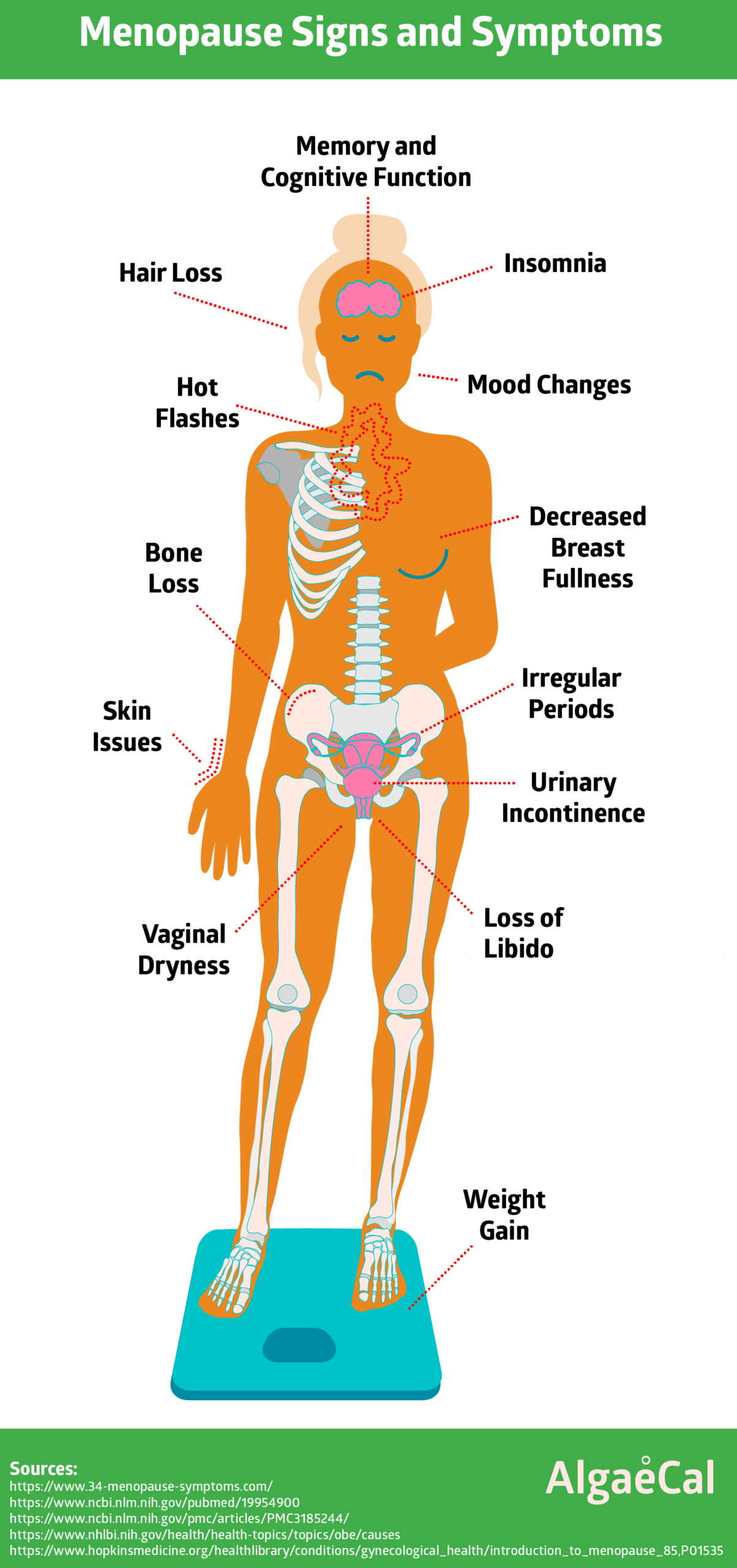
1. Hot Flashes
You’re in a meeting. Out for dinner. Sitting in church…
Then it hits.
A sudden rush of heat rises from your chest, spreads across your neck and face, and before you know it… you’re flushed, sweating, heart racing, and wondering, Where did that come from?
Then it disappears as quickly as it arrived, sometimes leaving you chilled, rattled, and wide awake.
That’s a hot flash. One of the most common and disruptive signs of menopause.
According to The Menopause Society, around 75 to 80% of women experienced hot flashes during mid-life. For some, they’re a mild warm wave. For others, they’re the kind of full-body event that soaks blouses, interrupts social events, and shows up at the worst possible moment.
What does a hot flash feel like?
A hot flash typically begins as a sudden sensation of warmth in the chest, neck, or face before spreading throughout the body.
It may be accompanied by:
- Flushed or reddened skin
- Sweating
- A rapid heartbeat
- Feelings of anxiety or restlessness
- Chills
They can last 30 seconds or several minutes. They can happen once in a while or many times a day.
What’s causing it?
As estrogen fluctuates and declines, the hypothalamus becomes more sensitive to changes in body temperature. So even a small shift can trigger an overactive cooling response: widened blood vessels, sweating, flushing, and that unmistakable surge of heat.
Research also suggests metabolic health may play a role. A 2026 study in The Journal of Clinical Endocrinology & Metabolism followed 704 women and found that higher fasting insulin levels at age 47 were associated with earlier onset of hot flashes and night sweats, as well as longer-lasting hot flashes and cold sweats. The findings suggest metabolic health may play a role in how vasomotor symptoms show up during menopause.
What helps?
Dress in layers, stay hydrated, and watch common triggers like alcohol, caffeine, and spicy foods. Regular movement, strength training, yoga, and stress support may also help reduce the intensity.
2. Night Sweats
For many women, the most frustrating part of menopause doesn’t happen during the day.
It happens at 2 a.m.
Night sweats are essentially hot flashes that occur during sleep, but that simple description doesn’t quite capture how disruptive they can be. While a daytime hot flash may last only a few minutes, a night sweat can leave you fully awake, overheated, and struggling to fall back asleep.
And unlike many menopause symptoms, the effects don’t necessarily end when the episode is over. They often linger into the following day.
What Night Sweats Feel Like
You wake overheated, flushed, and slick with sweat. Some women kick off the covers. Others change pajamas, flip the pillow, or even remake the bed.
Then comes the second problem: getting back to sleep.
Because even after the heat fades, your mind is awake. Your body feels unsettled. And the clock is still staring back at you.
What’s causing it?
As estrogen fluctuates, the hypothalamus, your brain’s temperature control center, becomes more sensitive. Even a tiny temperature shift can trigger a full cooling response: sweating, flushing, and a racing heart.
At night, that response can hit right in the middle of your sleep cycle.
That’s why the real damage isn’t just the sweat.
It’s the sleep loss.
How long can they last?
One of the most important menopause studies ever done — Study of Women’s Health Across the Nation (SWAN) — followed thousands of midlife women, tracking the physical, hormonal, emotional, sleep, and quality-of-life changes that happen through the menopause transition.
In a major 2015 analysis of SWAN participants, published in the prestigious Journal of the American Medical Association, researchers found that frequent vasomotor symptoms — meaning hot flashes and night sweats — lasted a median of 7.4 years overall. And for women whose symptoms started earlier in perimenopause, they often lasted much longer: more than 11.8 years in total, with symptoms continuing for a median of 9.4 years after the final menstrual period.
What helps?
Start with your sleep environment. Keep the room cool, use breathable bedding, wear moisture-wicking sleepwear, and watch evening triggers like alcohol, caffeine, spicy foods, and heavy meals.
A consistent bedtime, fewer screens at night, and stress support can also help protect the sleep you do get.
For some women, hormone therapy may be appropriate. Newer non-hormonal options may also help by targeting the brain pathways involved in temperature regulation.
3. Mood Changes
Few women are prepared for the emotional changes that can accompany menopause. One day, you may find yourself unusually irritable over something that normally wouldn’t bother you. Another day, you may feel anxious, overwhelmed, or emotionally fragile for reasons you can’t quite explain.
These experiences can be unsettling, particularly for women who have always felt emotionally steady.
The important thing to know is that mood changes during menopause are real, common, and increasingly well understood by researchers.
What Mood Changes Feel Like
Mood-related symptoms can vary considerably from woman to woman, but commonly include:
- Irritability
- Anxiety
- Increased emotional sensitivity
- Lower tolerance for stress
- Feelings of sadness
- Mood swings
- A sense of feeling “less like yourself”
For some women, these changes are mild and temporary.
For others, they can significantly affect relationships, work, and overall quality of life.
What’s Causing It?
Estrogen doesn’t just affect your period. It also helps influence brain chemicals involved in mood, including serotonin, dopamine, and norepinephrine.
So when estrogen fluctuates during perimenopause and menopause, your emotional regulation can feel less steady too.
Add in poor sleep, night sweats, work pressure, aging parents, changing family roles, and the general weight of midlife… and suddenly, your nervous system has a lot more to carry.
What The Research Shows
Researchers have found that women may be more vulnerable to symptoms of anxiety and depression during the menopausal transition than they are before or after it.
A 2025 UK Biobank study looked at depressive symptoms in 143,685 women. Using a depression screening tool, researchers found the highest rates of significant depressive symptoms — 7.6% — in women within one year of their final period.
In plain English?
Mood changes don’t randomly appear out of nowhere. For many women, the years immediately surrounding menopause are a more emotionally vulnerable window.
That matters because these symptoms are too often brushed off as “stress,” “age,” or “just life.”
But they’re not something you should have to white-knuckle through.
They can be part of the menopause transition, and they deserve to be taken seriously. For many women, simply recognizing that these experiences have a biological basis can help make them feel a little less confusing and a little less isolating.
What helps?
Start with the basics that support your nervous system: better sleep, regular movement, strength training, steady meals, less alcohol, and simple stress-reduction practices you’ll actually do.
For some women, hormone therapy may also help when appropriate, especially when mood changes are linked with other menopause symptoms like poor sleep, hot flashes, or night sweats.
4. Brain Fog & Memory Changes
Many women describe this symptom in remarkably similar ways.
“I walk into a room and forget why.”
“I lose my train of thought mid-sentence.”
“I know the word — I just can’t find it.”
These moments can be easy to laugh off at first. But when they start happening more often, they can feel unnerving. Especially for women who are used to being sharp, organized, and mentally quick.
What Brain Fog Feels Like
Brain fog can vary from woman to woman, but commonly includes:
- Forgetfulness
- Trouble concentrating
- Mental fatigue
- Difficulty finding words
- Reduced focus
- Feeling more easily distracted
- Losing your train of thought
For some women, these changes are mild and temporary.
For others, they can affect confidence at work, conversations with family, or the simple rhythm of daily life.
What’s Causing It?
Brain fog is rarely just “forgetfulness.” Researchers now believe it’s more likely a pile-up effect.
In a 2022 study published in Menopause, researchers assessed 404 women aged 40 to 65 and found that cognitive performance was linked to the severity of certain menopause symptoms, especially depressive symptoms. The study looked at areas such as attention, recall, language, and visuospatial skills, which are exactly the kinds of everyday abilities women notice when they lose a word, forget a detail, or feel mentally slower than usual.
So when a woman can’t find a word, loses her train of thought, or forgets why she walked into a room, it may not mean her brain is failing.
It may mean her brain is trying to perform under heavier conditions than usual.
What The Research Shows
Brain fog during menopause is a real thing! In a large community study of 14,234 women aged 45–55, around two-thirds of women reported cognitive concerns such as memory loss or concentration difficulties during menopause.
However, a 2026 review in The Lancet Obstetrics, Gynaecology, & Women’s Health emphasized that these symptoms are not linked to an increased risk of dementia.
That last point matters.
Because when you forget a name, lose a sentence halfway through, or stand in the kitchen wondering why you walked in there, it’s easy for fear to rush in.
But the research is reassuring.
For most women, menopause brain fog is usually modest and temporary. It is not proof that your brain is failing. It is not the start of a permanent decline. And it does not mean the sharp, capable version of you is gone. It means your brain is recalibrating during this hormonal transition.
5. Vaginal Dryness
Vaginal dryness is one of the most common, and often most distressing, symptoms women experience during and after menopause.
A 2023 narrative review on genitourinary syndrome of menopause reported that it affects an estimated 40% to 54% of postmenopausal women, with vaginal dryness among the most frequently reported symptoms.
Still, many women say nothing.
Not because the symptom is minor, but because it can feel private, embarrassing, or somehow separate from the rest of menopause.
It isn’t.
What Vaginal Dryness Feels Like
Vaginal dryness can present in several ways, including:
- Dryness or irritation
- Burning sensations
- Itching
- Discomfort during daily activities
- Pain during intercourse
- Reduced arousal
For some women, symptoms are mild.
For others, they can significantly affect comfort, intimacy, confidence, and quality of life.
What causes it?
Estrogen helps keep vaginal and vulvar tissue healthy. It supports natural lubrication, tissue thickness, blood flow, elasticity, and comfort.
So when estrogen levels fall during menopause, those tissues can become thinner, drier, less elastic, and more easily irritated, changes often called vaginal atrophy.
Today, clinicians usually use a broader term: genitourinary syndrome of menopause, or GSM.
That’s an important distinction.
Because this is not just about “dryness.” GSM can affect the vulva, vagina, and lower urinary tract, which is why symptoms can include dryness, burning, irritation, pain with sex, urinary urgency, and recurrent urinary tract infections.
What the research shows.
Vaginal dryness is one of the hallmark symptoms of GSM.
And unlike hot flashes, which often ease over time, GSM symptoms may persist or become more noticeable if they are not addressed. That is why leading menopause organizations treat it as a real clinical issue, not just an uncomfortable side note.
The 2020 position statement from The North American Menopause Society lists several evidence-based options for GSM, including vaginal lubricants, moisturizers, vaginal estrogen, vaginal DHEA, systemic hormone therapy, and other prescription therapies when appropriate.
The Endocrine Society also recognizes low-dose vaginal estrogen and ospemifene as effective therapies for GSM, while noting that vaginal moisturizers and lubricants are options for women who prefer not to use hormonal therapy.
In plain English?
Vaginal dryness is common.
It is physical.
And it is treatable.
6. Weight Gain
“I’m eating the same as I always have. Why is the scale going up?”
This is one of the most common complaints in menopause, and one of the most frustrating. You haven’t suddenly changed your habits, yet your body seems to be working against you. Clothes fit differently. Your waist feels thicker. The weight feels stubborn in a way it never was before.
What Weight Gain Feels Like
Many women notice:
- Gradual weight gain
- Increased abdominal fat
- Difficulty losing weight
- Changes in body composition
- A thicker waistline
- Clothes fitting differently, even when the scale has barely moved
What’s Causing It?
Several factors are at play.
Hormonal changes may influence where fat is stored. As estrogen declines, women often notice more fat accumulating around the abdomen rather than the hips and thighs.
At the same time, muscle mass naturally declines with age. Because muscle is a metabolically active tissue, losing it can gradually lower the number of calories the body burns at rest.
Sleep disturbances, stress, reduced physical activity, and lifestyle factors can further compound the issue.
The result is often a perfect storm that favors weight gain, particularly around the midsection.
What the research shows
Researchers increasingly believe menopause is linked less to a sudden jump on the scale, and more to a measurable shift in body composition.
One of the strongest studies comes from SWAN — the Study of Women’s Health Across the Nation — published in JCI Insight in 2019. Researchers followed 1,246 women across the menopause transition and used DEXA scans to measure body composition, not just body weight.
What they found was telling.
At the start of the menopause transition, the rate of fat gain doubled, while lean mass began to decline. These changes continued until about two years after the final menstrual period. Yet body weight itself did not show the same sudden acceleration. In other words, the scale didn’t tell the whole story. A woman’s body could be gaining fat and losing lean mass even if her weight changed only modestly.
A 2023 narrative review reached a similar conclusion. Researchers found that during the menopause transition, women tend to gain fat mass, especially around the abdomen, while fat-free mass declines. That shift may help explain why many women say, “I haven’t changed much on the scale, but my body feels different.”
The encouraging point is this:
Menopause-related body changes are common, but they are not completely out of your hands.
A 2021 review in Menopause explains that midlife weight gain varies widely between women and is influenced by more than hormones alone. Aging, lower activity levels, sleep disruption, and metabolic changes can all contribute. The review also highlights a common menopause-related pattern: more fat stored around the abdomen, even when overall weight gain is modest. That’s why the most effective approach is not simply “eat less.” It’s protecting muscle, supporting metabolism, improving sleep, staying active, and building a sustainable nutrition pattern that works in real life.
In plain English?
The better question may not be, “Why am I gaining weight?”
It may be:
“What can I do to protect my muscles, metabolism, and long-term health?”
7. Bone Loss
Hot flashes announce themselves. Night sweats wake you up. Mood changes make themselves known.
But bone loss is different.
There’s no warning light. No obvious discomfort. No moment where your body says, Your skeleton needs attention.
That’s why osteoporosis is often called a silent disease. Many women don’t know their bones are thinning until a bone density scan shows it, or until a small fall leads to a fracture.
And that’s exactly why menopause is such an important moment for bone health.
What’s causing it?
Your bones are living tissue. All day, every day, your body is breaking down old bone and building new bone in its place.
When you’re younger, those two jobs usually stay in balance. But as estrogen falls during menopause, that balance can shift.
Estrogen helps keep bone breakdown under control. When levels drop, the cells that break down bone can become more active, while the cells that rebuild bone may struggle to keep up.
In plain English?
Your body may start losing bone faster than it can replace it.
Over time, that can mean lower bone density, weaker bones, and a higher risk of fractures.
What does the research show?
Research suggests women may lose up to 20% of their bone mass during the menopause and postmenopause years. The exact amount varies, of course. Genetics, nutrition, exercise, body weight, medications, smoking, alcohol, and your starting bone density all matter.
But the overall message is hard to ignore:
Menopause is a critical window.
Especially for women who already have low bone density going in. They simply have less “reserve” to lose before crossing into osteopenia or osteoporosis.
And because bone loss usually doesn’t hurt, it can be easy to miss.
You can feel completely normal…
while your bones are quietly becoming more fragile.
How do you know if it’s happening?
You don’t guess. You scan.
A DEXA scan — often called a bone density scan — measures the mineral content in your bones and helps show whether your bone density is normal, low, or in the osteoporosis range.
It’s simple. It’s non-invasive. And for many women, it’s the first real clue that their bones need more support.
That matters because waiting for a fracture is the worst way to find out.
Why this is a time to act
This isn’t about panic. It’s about protecting your future self.
The habits you build during and after menopause can shape your bone strength for decades. Calcium, vitamin D, resistance training, weight-bearing exercise, protein, balance work, and regular screening can all help protect the bones you’ll rely on for the rest of your life.
Because bone loss may be silent…but you don’t have to be passive.
Menopause is the moment to pay attention, ask for the scan, and start giving your bones what they need to stay strong.
The Good News About Menopause
After reading through these symptoms, it would be understandable to think:
“That sounds like a lot.”
And in many ways, it can be.
Menopause can bring real physical, emotional, and hormonal changes. Some are mildly inconvenient. Others can affect sleep, confidence, intimacy, energy, mood, and long-term health in ways that deserve to be taken seriously.
But menopause is not simply a story of loss. For many women, it becomes a turning point.
A moment when they begin listening more closely to their bodies. Paying more attention to sleep. Building strength. Nourishing themselves more intentionally. Managing stress with greater care. Asking better questions. And taking practical steps to support their bones, brain, heart, muscles, and overall well-being.
In other words, menopause is not the beginning of decline.
It can be the beginning of a deeper relationship with your health.
Key Takeaway
Menopause symptoms can affect nearly every system in the body—from temperature regulation and sleep to mood, memory, skin, bladder health, and bone density.
While these changes can feel overwhelming at times, they are also understandable.
And once you understand what’s happening, you’re in a much better position to support your body through the transition and continue living a strong, active, healthy life for decades to come.
Frequently Asked Questions
At What Age Do Menopause Symptoms Typically Start?
Most women begin noticing changes during perimenopause, which commonly starts in the 40s.
But there is no perfect calendar for this.
Some women notice symptoms earlier. Others feel very little until their late 40s or early 50s. The first signs are often subtle enough to dismiss at first — a missed period here, a restless night there, a mood shift that feels out of character.
That’s why many women don’t immediately think, “This is menopause.”
They think, “What is going on with me?”
Disclaimer: This article is for educational purposes only and is not a substitute for medical advice, diagnosis, or treatment. Always speak with your healthcare provider about symptoms, treatment options, medications, supplements, or changes to your health routine.
What Are The First Signs Of Menopause?
For many women, the first clue is a change in their cycle. Periods may arrive early, late, heavier, lighter, or skip altogether. Then other symptoms may begin to appear: hot flashes, disrupted sleep, mood changes, night sweats, or a sense that your body is no longer following its usual rhythm.
It can feel confusing at first because the changes rarely arrive in a neat, obvious order.
What Are The Most Common Menopause Symptoms?
The most commonly reported symptoms include hot flashes, night sweats, insomnia, mood changes, irregular periods, brain fog, vaginal dryness, weight gain, and bone loss.
Some are obvious. Others are less so.
A hot flash gets your attention. A night sweat wakes you up. But bone loss, changes in body composition, or gradual shifts in memory can unfold more quietly in the background.
That’s why it helps to understand menopause as a whole-body transition, not just a change in your period.
Can Menopause Symptoms Start Before Menopause?
Yes. In fact, this is where many women get caught off guard.
Menopause is technically confirmed after 12 consecutive months without a period. But symptoms often begin years before that, during perimenopause.
During this stage, hormones can rise and fall unpredictably. One month may feel normal. The next may bring sleep changes, mood shifts, hot flashes, or an irregular cycle.
So yes — you can absolutely experience menopause-related symptoms before you are officially “in menopause.”
How Long Do Menopause Symptoms Last?
It varies widely.
Some symptoms ease after a few months or years. Others can continue well beyond the final period. Hot flashes and night sweats, in particular, may last for several years for many women.
This can be frustrating to hear, but it is also important.
Because if symptoms are affecting your sleep, mood, relationships, comfort, or quality of life, you do not have to simply wait them out. There are ways to support your body and make this transition easier to manage.
Is Weight Gain During Menopause Inevitable?
No.
But it can become easier to gain weight, especially around the middle.
Hormonal changes may affect where fat is stored. At the same time, muscle mass naturally declines with age, which can slow metabolism. Add poor sleep, stress, and a busy life, and the body can start responding differently than it did ten years ago.
That does not mean weight gain is inevitable.
It means your strategy may need to change.
Strength training, protein-rich meals, better sleep, daily movement, and stress management become more important than ever.
Can Menopause Affect Memory?
Yes.
Many women notice brain fog, forgetfulness, trouble concentrating, or difficulty finding words during the menopausal transition.
And for women who are used to being sharp and capable, that can feel frightening.
But in many cases, these changes are linked to the wider picture of menopause: fluctuating hormones, disrupted sleep, stress, mood changes, and the normal demands of midlife.
It does not automatically mean something is seriously wrong.
Often, it means your brain is working under heavier conditions than usual.
Which Menopause Symptom Is Often Overlooked?
Bone loss.
Because unlike hot flashes, mood changes, or poor sleep, bone loss usually does not make itself known.
You do not feel your bone density declining. You do not wake up one morning and sense that your skeleton is weaker than it used to be.
Often, the first sign appears on a bone density scan — or after a fracture.
That is why bone health deserves special attention during and after menopause. It may be quiet, but it is one of the most important long-term changes to take seriously.
Sources
Sources
https://menopause.org/patient-education/menopause-topics/hot-flashes
Faria Athar, Sarah Gregory, Emma J Houston, Nicole M Templeman, Insulin Levels Early in Perimenopause Inform Vasomotor Symptom Incidence Across the Menopausal Transition, The Journal of Clinical Endocrinology & Metabolism, Volume 111, Issue 6, June 2026
https://www.swanstudy.org/about/about-swan
Avis NE, Crawford SL, Greendale G, et al. Duration of Menopausal Vasomotor Symptoms Over the Menopause Transition. JAMA Intern Med. 2015;175(4):531–539.
Mayet H, Marwick K, Pfaff M, Stone JM. Menopause and Depressive Symptoms in the UK Biobank. BJPsych Open. 2025 Jun 20;11(Suppl 1):S56. doi: 10.1192/bjo.2025.10175.
Kaur M, Kaur M. Is cognitive performance of women sensitive to the severity of menopausal symptoms? Menopause. 2022 Jan 10;29(2):170-177. doi: 10.1097/GME.0000000000001910.
Naysmith, L.F., Ward, H., Elliott, P. et al. Cognition and the menopause transition: cross-sectional evidence from a large community cohort. npj Womens Health 4, 14 (2026).
Geddes, C., Spector, A., Hague, M., & Gurvich, C. (2026). Advances in understanding of cognitive symptoms during menopause. The Lancet Obstetrics, Gynaecology, & Women’s Health, 2(4), e335–e345.
Wasnik VB, Acharya N, Mohammad S. Genitourinary Syndrome of Menopause: A Narrative Review Focusing on Its Effects on the Sexual Health and Quality of Life of Women. Cureus. 2023 Nov 2;15(11):e48143.
The NAMS 2020 GSM Position Statement Editorial Panel. The 2020 genitourinary syndrome of menopause position statement of The North American Menopause Society. Menopause. 2020 Sep;27(9):976-992.
Stuenkel, C. A., Davis, S. R., Gompel, A., Lumsden, M. A., Murad, M. H., Pinkerton, J. V., & Santen, R. J. (2015). Treatment of symptoms of the menopause: An Endocrine Society Clinical Practice Guideline. The Journal of Clinical Endocrinology & Metabolism, 100(11), 3975–4011
Greendale, G. A., Sternfeld, B., Huang, M., Han, W., Karvonen-Gutierrez, C., Ruppert, K., Cauley, J. A., Finkelstein, J. S., Jiang, S.-F., & Karlamangla, A. S. (2019). Changes in body composition and weight during the menopause transition. JCI Insight, 4(5), e124865.
Fenton, A. (2023). Fat mass, weight and body shape changes at menopause — causes and consequences: a narrative review. Climacteric, 26(5), 429–439
Knight MG, Anekwe C, Washington K, Akam EY, Wang E, Stanford FC. Weight regulation in menopause. Menopause. 2021 May 24;28(8):960-965.
https://www.endocrine.org/patient-engagement/endocrine-library/menopause-and-bone-loss



Makhosi
March 14, 2019 , 12:06 amHi I’m very happy about all I read here; I gain a lot of information; but only one question; my breasts are very sore, it might also sign of menopause? thank you so much to keep this information on the internet, most of my questions are answered